
International Shipping Containers Explained with Clarity and Depth
A trusted editorial resource for container logistics, freight systems, port operations, and global shipping trends. Explore practical insights on container types, global routes, port activity, supply chain pressure, and the operational realities shaping international cargo movement.
International Shipping Containers: A Practical Guide to Global Container Shipping


By: Adam Heath
Adam Heath covers international shipping containers with a focus on freight systems, port activity, trade routes, and operational shipping realities. His writing on 4chanarchive.org is built to make complex container logistics easier to understand, without watering down the details.
International shipping containers are one of the foundational systems behind modern trade. They move finished goods, raw materials, industrial machinery, retail inventory, automotive parts, electronics, food products, chemicals, and temperature-sensitive cargo through a freight network that connects factories, ports, vessels, inland depots, rail terminals, customs authorities, warehouses, and final delivery points.
From the outside, a shipping container looks simple: a steel box designed to hold cargo. In practice, it is far more important than that. A container is a standardized freight unit that allows cargo to move through a complex intermodal system with greater speed, security, predictability, and scale. It is the operational link between shipper, freight forwarder, carrier, terminal, port authority, customs system, consignee, and inland transport provider.
That distinction matters. International shipping is not only about putting goods on a vessel. It is about equipment selection, packing logic, route planning, terminal handling, documentation accuracy, customs compliance, inland coordination, schedule control, and cost exposure. A container may travel across an ocean, but the shipment itself moves through an entire logistics architecture.
This guide explains that architecture in a practical and editorial way. It covers what international shipping containers are, why they matter, how they move through the supply chain, what affects container costs, which documents control cargo release, and where the major operational risks usually appear.
Why International Shipping Containers Matter in Global Trade
Containerization changed international freight by replacing fragmented cargo handling with a standardized unit system. Instead of moving cargo piece by piece at every stage, goods can be loaded into a container at origin and remain inside that same unit through multiple transfer points until destination delivery or unpacking.
That operational model improves nearly every part of cargo movement. It increases loading efficiency, strengthens cargo protection, supports vessel productivity, reduces repetitive handling, improves terminal throughput, and makes freight planning more predictable across long-distance trade lanes. It also allows goods to transfer more easily between truck, rail, depot, terminal, and vessel without repeated breakdown and repacking.
In practical terms, containerization supports:
- faster cargo handling
- more efficient vessel stowage
- better port productivity
- stronger freight predictability
- lower exposure to cargo damage
- smoother intermodal transfer
- scalable international trade volumes
This is why container shipping sits at the heart of the global supply chain and remains central to broader global maritime transport trends. It supports manufacturing exports, wholesale distribution, retail replenishment, e-commerce fulfillment, project cargo planning, cold chain logistics, and industrial procurement. Without containerization, international freight would be slower, harder to coordinate, less secure, and more expensive to scale.
What an International Shipping Container Really Is
An international shipping container is a standardized cargo unit built to move goods across multiple stages of transport without requiring the cargo itself to be repacked at each handover point. Containers are designed to be lifted by cranes, stacked in yards and on vessels, secured in transit, tracked through freight systems, and transferred between transport modes with minimal disruption.
That standardization is what gives the container its strategic value. Ports, container terminals, depots, chassis systems, rail interfaces, and container vessels are all built around predictable equipment dimensions and handling methods. The container is not just packaging. It is part of the infrastructure of global trade.
It is also important to understand that “shipping container” is not one single thing. The category includes multiple equipment types, multiple lengths and heights, and multiple handling profiles based on the physical nature of the cargo. A shipment of machinery, a shipment of pharmaceuticals, a shipment of furniture, and a shipment of liquid chemicals may all move in containers, but not in the same kind of unit and not under the same handling conditions.
Types of International Shipping Containers
One of the most common mistakes in freight is treating container choice as a minor detail. It is not. The type of container used affects packing efficiency, cargo protection, loading method, route suitability, port handling practicality, regulatory compliance, and total shipment cost.
Different commodities create different equipment demands. Cargo may be dense, oversized, fragile, temperature-sensitive, top-loaded, side-loaded, palletized, liquid, hazardous, or irregular in shape. Because of that, international container shipping relies on a range of equipment types rather than one uniform box.
The main container categories include:
- standard dry containers
- high cube containers
- reefer containers
- open top containers
- flat rack containers
- tank containers
- side-open containers
- specialized project and non-standard equipment
A standard dry container is the most common unit in international freight. It is generally used for general cargo, consumer goods, packaged products, retail inventory, industrial components, palletized cargo, and non-temperature-sensitive freight.
A high cube container performs a similar function but provides additional internal height. That makes it useful for light but bulky cargo, packaging-heavy shipments, and freight where cubic capacity matters more than purely dense loading.
A reefer container is built for temperature-controlled cargo. It is commonly used for food products, agricultural exports, pharmaceuticals, medical supplies, and other cargo that depends on cold chain stability. In reefer logistics, delay can mean more than schedule disruption. It can directly affect cargo condition and commercial value.
Open top containers are used when cargo cannot be loaded practically through standard rear doors and instead requires crane loading from above. Flat rack containers are designed for oversized or irregular freight such as machinery, heavy equipment, structural materials, and project cargo that exceeds the loading profile of an enclosed unit. Tank containers are used for liquids, bulk chemicals, and certain specialized fluid commodities. Side-open units offer broader access where side loading is operationally easier.
The correct equipment selection reduces wasted space, improves load distribution, supports safer packing, and lowers the chance of handling difficulty later in the shipment. The wrong equipment does the opposite. It can create instability, inefficient use of cubic capacity, loading complications, cargo damage, additional handling cost, and higher delay risk at both origin and destination.
Shipping Container Sizes and Dimensions
Container type matters, but container size matters just as much. A shipment can fail operationally even when the commodity is suitable for containerization if the selected unit does not align with the weight profile, internal dimensions, pallet layout, door access, or cubic demands of the cargo.
The most common container sizes in international shipping are:
- 20-foot container
- 40-foot container
- 40-foot high cube container
These are standardized units within the container freight system, but they are not interchangeable in every scenario.
A 20-foot container is often more suitable for dense cargo that reaches payload limits before cubic capacity is fully used. A 40-foot container is more suitable for cargo that needs additional floor space. A 40-foot high cube offers added internal height and better cubic efficiency for taller, packaging-heavy, or more voluminous shipments.
Container dimensions influence:
- internal cubic capacity
- pallet arrangement
- load geometry
- door clearance
- payload efficiency
- weight distribution
- freight economics
- packing practicality
A shipment that appears to fit in theory may not fit in practice if the loading plan ignores door opening dimensions, awkward cargo shape, stacking limitations, pallet overhang, center-of-gravity concerns, or cargo securing requirements. In container shipping, usable space is not only about internal volume. It is about operational loading reality.
How International Container Shipping Works from Origin to Destination
Understanding the container itself is only the first layer. The real complexity begins when the shipment enters the live freight chain.
International container shipping works as a coordinated sequence of events rather than one isolated transport movement. A typical shipment may involve shipment planning, freight booking, container release, cargo packing, drayage or inland transport to port, terminal gate-in, export handling, vessel loading, ocean transit, transshipment, port discharge, customs clearance, delivery order processing, final inland transport, unpacking, and empty container return.
The process usually begins with shipment planning. At this stage, the cargo profile is assessed: commodity type, packaging format, dimensions, gross weight, Incoterms responsibilities, route structure, timing requirements, documentation needs, and equipment suitability. This is also where decisions around FCL, LCL, reefer requirements, dangerous goods declarations, and routing options begin to matter.
Next comes freight booking. Cargo space may be booked with an ocean carrier directly or through a freight forwarder or NVOCC. Once the booking is confirmed, container allocation or release follows, and the shipment is prepared for loading. Cargo then has to be packed according to practical freight principles, not just available space. Weight distribution, securing method, fragility, stacking tolerance, ventilation needs, and unload sequence all matter.
From there, the container moves inland to the export terminal. This part is often underestimated. Trucking availability, depot pickup, port cut-off times, VGM compliance, traffic constraints, and gate scheduling all affect whether the container reaches the terminal on time.
After arrival at port, the unit enters terminal handling operations. It is gated in, positioned in the yard, associated with the planned vessel, and prepared for loading. Once loaded, the container begins ocean transit. Depending on the service, this may be a direct sailing or a transshipment movement through one or more hub ports.
At destination, the container is discharged from the vessel and placed into the import terminal system. But arrival does not mean immediate release. Customs clearance, import documentation checks, duties and taxes, inspection requirements, quarantine controls, and consignee-side paperwork may still determine when the cargo can actually move.
Once customs and terminal release conditions are satisfied, the shipment moves into final inland delivery. The container is delivered to the consignee, warehouse, distribution center, or unpacking point. Even then, the process is not fully finished. The empty container often must be returned to a nominated depot within a specified free-time window to avoid detention or related charges.
This is why international container shipping should be understood as a logistics system, not merely a sea transport service. Vessel movement is only the visible middle section of a much larger chain.
Major Global Shipping Routes and Trade Corridors
Containers do not move through random ocean space. They move through structured maritime corridors shaped by trade demand, manufacturing concentration, port infrastructure, carrier networks, feeder services, transshipment hubs, and inland distribution systems.
The most important global route systems include:
- Asia to Europe
- Trans-Pacific
- Intra-Asia
- Asia to Middle East
- Asia to Africa
- Europe to North America
- Oceania-linked shipping routes
- Latin America-connected trade corridors
These trade lanes influence far more than map geography. They shape transit time, service frequency, schedule reliability, transshipment exposure, equipment availability, congestion risk, carrier competition, and freight pricing.
A direct service may offer stronger timing predictability but a different cost structure. A transshipment-heavy route may lower or alter cost but introduce more schedule risk and dependence on intermediate ports. Trade route design also influences how resilient or fragile the shipment becomes when disruption occurs. A missed connection in a hub port can affect downstream delivery much more than a direct-service delay of similar duration.
International Shipping Container Costs
One of the most misleading assumptions in freight is the idea that an international shipping container has one simple price. It does not. A container shipment is priced through layers of logistics activity, and the final cost depends on how the cargo interacts with the wider transport system.
The main cost components usually include:
- ocean freight rate
- container type and container size
- service route and transshipment profile
- fuel-related carrier cost pressure
- terminal handling charges
- origin and destination inland transport
- customs-related exposure
- storage, detention, and demurrage
- seasonal volume pressure
- container availability and repositioning imbalance
The ocean freight rate is usually the most visible number in a quote, but it is only one part of the shipment economics. Equipment type matters because standard dry containers, reefers, flat racks, open tops, and tank units do not carry the same handling burden or supply profile. Size matters because 20-foot, 40-foot, and 40-foot high cube containers solve different freight problems and do not create the same space efficiency for every commodity.
Route structure also changes cost. Direct sailings, feeder connections, congested trade lanes, and transshipment-heavy services all influence pricing logic. A container moving through high-volume, well-balanced markets may price differently from a container moving through trade lanes with equipment shortages or operational imbalance.
Terminal handling charges reflect the cost of moving the unit through port and yard systems. Inland transport adds another major layer, especially where drayage, depot movement, rail transfer, or long-distance trucking is involved. Then there are the indirect cost pressures that often hurt shippers the most: customs delay, inspection dwell time, late pickup, slow unpacking, missed free time, and late empty return.
That is where storage, demurrage, and detention become commercially significant. A shipment can look affordable at base freight level and become materially more expensive once terminal dwell, release delays, or inland coordination failures are added.
Port Operations and Cargo Handling
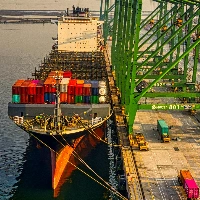
Ports are where container shipping becomes physically real. A shipment that looks straightforward on paper still has to move through a live terminal environment shaped by cranes, berth windows, yard planning, stack positions, truck queues, vessel schedules, customs processes, reefer monitoring, and gate operations.
Typical port-side functions include:
- terminal gate processing
- container yard planning
- quay crane handling
- vessel loading and discharge
- reefer plug-in and monitoring
- customs-linked release flow
- truck and rail interface
- empty container handling
This part of the logistics chain is highly operational. A properly booked shipment with correct paperwork can still face delay if the port is congested, the yard is under pressure, labor performance weakens, truck appointment systems tighten, or vessel windows shift.
Port performance affects:
- vessel turnaround time
- container dwell time
- pickup scheduling
- final delivery coordination
- schedule reliability
- storage cost exposure
Shipping Documents and Customs Processes
Containers move physically, but they also move through data, declarations, and document control. In international freight, paperwork is not secondary. It is one of the systems that determines whether the cargo can move, clear, and be released.
Common documents in container freight include:
- commercial invoice
- packing list
- bill of lading
- shipping instructions
- certificate of origin
- export declaration
- import declaration
- permits, licenses, or commodity-specific compliance documents
These documents define the cargo identity and regulatory profile. They establish what the goods are, who the parties are, where the shipment is moving, how the goods are valued, how they should be classified, and whether customs can authorize release.
That is why documentation errors become operational failures. A container may arrive at destination exactly on schedule and still remain blocked in the terminal because the invoice is inconsistent, the goods are misclassified, the declaration is incomplete, the consignee details do not align, or customs requests clarification, inspection, or additional evidence.
Risks, Delays, and Supply Chain Disruption
International container shipping depends on alignment. Equipment, booking, documents, terminals, vessel schedules, customs release, trucking, depot control, and consignee readiness all have to connect at the right time. Because of that, the system is naturally exposed to disruption whenever one part of the chain falls out of sequence.
The most common pressure points include:
- port congestion
- vessel delay
- customs hold
- documentation error
- container shortage
- inland transport bottleneck
- transshipment failure
- weather disruption
- labor instability
- reefer handling failure
- storage, detention, and demurrage escalation
These are not isolated inconveniences. They are system-level disruptions. One problem often triggers the next. A document issue becomes a customs hold. A customs hold creates terminal dwell. Terminal dwell creates storage cost. Slow pickup creates detention risk. A missed connection can disrupt downstream warehousing, stock availability, manufacturing input timing, or retail replenishment plans.
Port congestion can delay berthing, loading, discharge, yard flow, and pickup. Vessel delays can ripple across service networks and cause missed transshipment windows. Container shortages can delay export planning before the shipment even begins. Inland bottlenecks can trap the container at origin or destination despite normal port conditions. Reefer failure is especially serious because it can compromise cargo quality, not only timing.
Final Thoughts
International shipping containers are more than cargo boxes. They are the standardized units that make global container trade possible. But the real subject is not the steel container alone. The real subject is the freight network around it: carriers, forwarders, ports, terminals, customs systems, trade lanes, inland transport, container depots, equipment flows, commercial terms, and operational risk.
Editor’s Picks
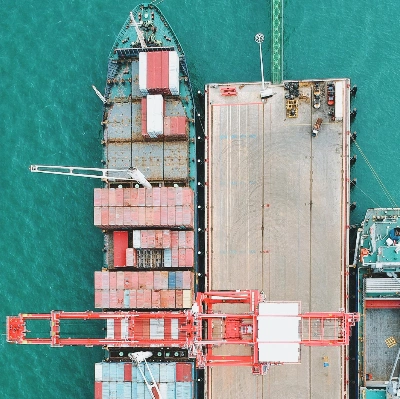
Types of Shipping Containers
Explore the main shipping container types used in global trade, from dry containers and reefers to flat racks, open tops, and specialized units.
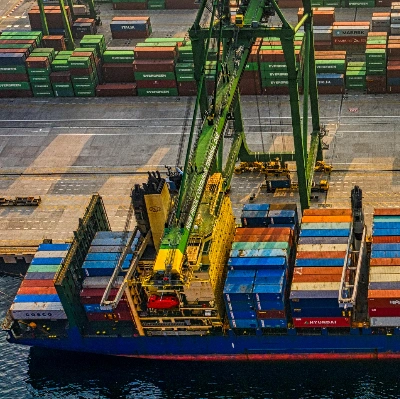
Container Sizes and Dimensions
Understand standard container sizes, internal dimensions, and capacity differences between 20ft, 40ft, and high cube shipping containers.
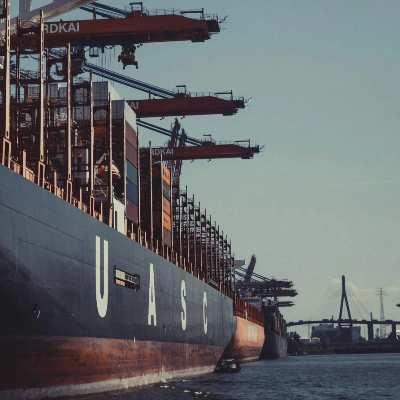
How Container Shipping Works
Learn how international container shipping moves from origin to destination, including booking, loading, ocean transit, customs, and final delivery.

Global Shipping Routes
Discover the major shipping routes that connect ports, trade regions, and international container flows across the global freight network.
Explore More
Container Costs and Pricing
See what affects container shipping costs, from freight rates and fuel pressure to port charges, inland transport, and equipment availability.
Port Operations and Cargo Handling
Find out how ports handle containers through terminals, cranes, yard systems, cargo flow, and operational processes that affect shipping efficiency.
Shipping Documents and Customs
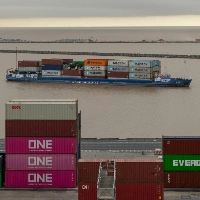
Review the key shipping documents and customs steps used in container freight, including bills of lading, invoices, packing lists, and clearance procedures.
Shipping Risks and Delays
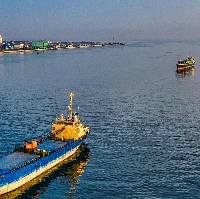
Examine the common risks behind shipping delays, including port congestion, customs holds, documentation errors, weather disruption, and supply chain pressure.
4chanarchive
International Shipping
Read clear, structured insights on container logistics, cargo flow, documentation, route efficiency, and the commercial forces influencing international trade.